
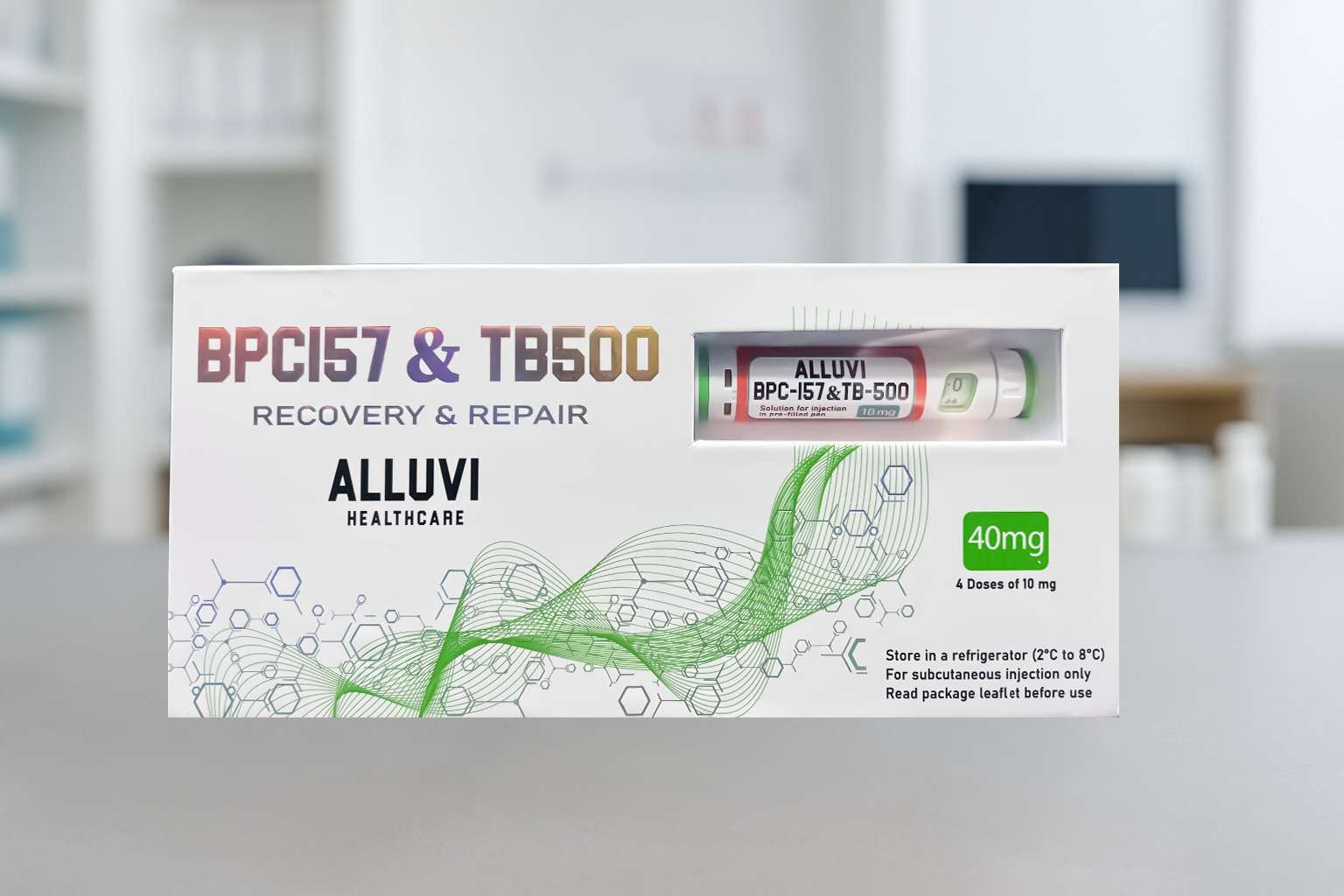
BPC157 & TB500
£165.00
BPC157 TB500 refers to two distinct investigational peptides discussed in laboratory and preclinical research. This information guide from Alluvi Healthcare explains their scientific background, differences, research limitations and UK regulatory considerations. It does not recommend either substance for personal use or medical treatment.
BPC157 TB500: Research Background and Scientific Information
BPC157 TB500 refers to two distinct investigational peptides discussed in scientific and preclinical research. This information guide from Alluvi Healthcare explains the scientific background of BPC-157 and TB-500, their differences, the limitations of available research and important UK regulatory considerations. It does not recommend either substance for personal use or medical treatment.
What Is BPC-157?
BPC-157 is a synthetic peptide consisting of 15 amino acids. It has attracted scientific interest through laboratory and animal studies investigating biological processes associated with tissue responses, inflammation and gastrointestinal function.
However, preclinical findings do not establish that BPC-157 is safe or effective in humans. Further appropriately designed clinical research is required to determine its potential medical applications, safety profile and effectiveness.
What Is TB-500?
TB-500 is commonly described as a synthetic peptide fragment associated with the thymosin beta-4 sequence. Thymosin beta-4 is a naturally occurring protein studied in connection with cellular processes and tissue responses.
It is important to distinguish TB-500 from the complete thymosin beta-4 protein. Research involving the full-length protein cannot automatically be treated as evidence for every synthetic fragment associated with it.
What Is the Difference Between BPC-157 and TB-500?
BPC-157 and TB-500 are not the same compound. They have different structures and distinct research backgrounds.
- BPC-157: A synthetic 15-amino-acid peptide investigated mainly in laboratory and animal research.
- TB-500: A synthetic peptide fragment associated with the thymosin beta-4 sequence.
Although the two compounds are often discussed together online, this does not demonstrate that they have a proven combined effect. There is insufficient established clinical evidence to conclude that using the combination produces a particular health or recovery outcome in humans.
What Does Scientific Research Say About BPC157 TB500?
Research into these peptides remains limited. Much of the scientific discussion comes from preclinical studies, which are useful for exploring biological mechanisms but cannot independently establish human safety or treatment effectiveness.
BPC-157 research
BPC-157 has been investigated in experimental models involving different biological processes. Findings from these studies should be interpreted cautiously because animal models do not reliably predict the results of human clinical trials.
A registered clinical study can be explored through ClinicalTrials.gov. Registration alone does not prove that a treatment works, has been approved or is suitable for clinical use.
TB-500 research
Scientific interest in TB-500 is often discussed alongside research involving thymosin beta-4. However, evidence involving a different peptide structure or the complete protein should not be assumed to establish the safety or effectiveness of TB-500 itself.
Is BPC157 TB500 Approved in the UK?
BPC-157 and TB-500 should not be presented as authorised routine UK medicines or established treatments without evidence of the relevant regulatory authorisation.
The legal classification of a substance can depend on its composition, presentation, intended purpose and the claims made about it. A product described as being for research purposes is not automatically exempt from medicines regulation.
The MHRA guidance on advertising medicines explains the restrictions that apply to advertising medicines in the United Kingdom. Businesses should obtain appropriate specialist regulatory advice before making products available or publishing claims about their intended use.
Safety and Evidence Limitations
The available evidence does not establish the safety of BPC-157 or TB-500 for unsupervised human use. Online descriptions, product labels and supplier statements cannot independently establish a substance’s identity, composition, purity, sterility or suitability for administration.
People experiencing an injury or another health concern should consult a qualified healthcare professional rather than relying on experimental compounds or online protocols.
Research, Sport and Anti-Doping Considerations
Athletes and competitive sports participants should check the applicable anti-doping requirements before encountering substances discussed in peptide research.
The World Anti-Doping Agency Prohibited List is an official reference for prohibited substances and categories. Athletes should consult the current list and their relevant sporting organisation for guidance.
Frequently Asked Questions About BPC157 TB500
Are BPC-157 and TB-500 the same peptide?
No. They are distinct compounds with different structures and research backgrounds. They should not be treated as interchangeable.
Is the BPC157 TB500 combination clinically proven?
There is insufficient established clinical evidence to demonstrate that the combination produces a proven treatment benefit in humans.
Are BPC-157 and TB-500 approved UK medicines?
They should not be represented as authorised routine UK medicines. Their regulatory classification and any proposed supply require appropriate assessment.
Does laboratory research prove that these peptides work in humans?
No. Laboratory and animal research can help scientists investigate biological processes, but it does not independently establish human safety or effectiveness.
Does a research-use label prove that a product is safe?
No. A research-use label does not establish product identity, purity, sterility, regulatory approval or suitability for human use.
Where can I find reliable UK regulatory information?
The Medicines and Healthcare products Regulatory Agency provides official information about medicines regulation in the United Kingdom.
Important Information
This page is provided for general scientific and regulatory information only. It is not medical advice, a treatment recommendation or an invitation to use investigational substances. Readers should consult qualified healthcare professionals about medical concerns and seek specialist regulatory advice before any commercial supply or promotion.
Related products
Weight Loss
Weight Loss
Weight Loss
Weight Loss