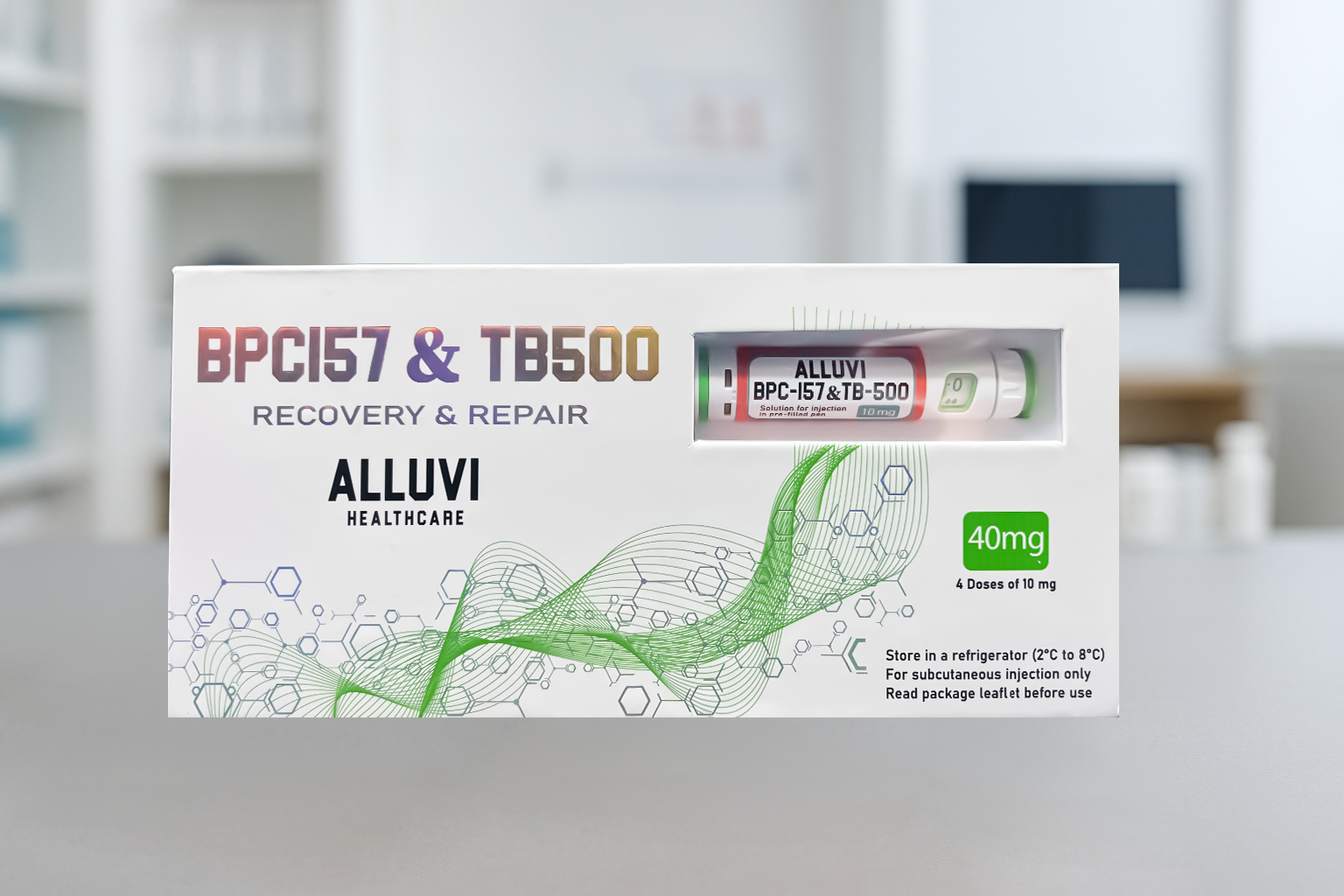
BPC157 and TB500 40mg – Alluvi Healthcare
Original price was: £159.00.£138.00Current price is: £138.00.
BPC157 and TB500 are two distinct experimental peptide-related substances discussed in scientific research. Explore their molecular background, available research, product identification considerations and important safety and UK regulatory information. The product’s stated 40mg quantity should not be interpreted as the individual amount of either component without verified product documentation.
BPC157 and TB500: Research and Product Information
BPC157 and TB500 are two experimental peptide substances that have attracted attention in laboratory and preclinical research. People researching this combination should understand the difference between experimental findings, established clinical evidence and authorised medical treatments. Alluvi Healthcare encourages readers to consult reliable scientific and regulatory information before drawing conclusions about any peptide product.
The product URL identifies this listing as a 40mg combination. However, the individual quantities, ingredient ratio, exact formulation and manufacturer should be confirmed using the original product label and supporting documentation. The total quantity alone does not establish the amount of each component.
What Are BPC157 and TB500?
BPC-157 and TB-500 are distinct peptide-related substances that are discussed in experimental research. They have different molecular identities and should not be treated as interchangeable compounds.
BPC-157 is a synthetic peptide associated with research into biological processes involving gastrointestinal tissues, inflammation and tissue responses. Much of the published research is preclinical, including laboratory and animal studies.
TB-500 is a name commonly used for a thymosin beta-4-related peptide fragment. It is discussed in experimental research involving cellular processes and biological signalling. The exact identity of a substance described as TB-500 should be established from its analytical documentation rather than relying on the product name alone.
Understanding BPC-157 Research
BPC-157 has been investigated in preclinical research involving several biological processes. Some experimental studies have explored its relationship with tissue responses, gastrointestinal biology and inflammatory pathways.
However, findings from laboratory experiments and animal studies cannot establish that BPC-157 is safe or effective as a treatment in humans. Reliable clinical evidence remains insufficient to support broad therapeutic claims.
Readers can explore published scientific literature through PubMed’s BPC-157 research database. Individual publications should be assessed according to their study design, methodology, limitations and relevance to human health.
Understanding TB500 Research
TB-500 is commonly associated with a fragment of thymosin beta-4. Thymosin beta-4 is a naturally occurring peptide involved in biological processes, including actin regulation and cellular activity.
Research involving full-length thymosin beta-4 should not automatically be interpreted as evidence about TB-500. Differences in molecular structure can affect biological activity, and findings about one substance cannot simply be transferred to another.
For scientific background, readers can consult published thymosin beta-4 research on PubMed.
BPC157 and TB500: Understanding the Combination
BPC157 and TB500 are sometimes discussed together in experimental peptide research. Their appearance in the same product listing does not establish that the combination has been clinically tested or that the substances produce a proven combined effect.
Before evaluating a product described as BPC157 and TB500, it is important to establish:
- The exact identity of each stated peptide.
- The individual quantity of BPC-157 and TB-500.
- The total quantity and stated composition of the product.
- The manufacturer or responsible supplier.
- The batch identification and traceability details.
- The availability and scope of relevant analytical documentation.
- The product’s intended classification and applicable regulatory status.
Claims about synergistic effects, recovery, injury repair or other medical outcomes should not be presented as established facts without appropriate clinical evidence for the exact combination.
BPC157 and TB500 Safety Information
Safety is an important consideration when researching experimental peptide substances. The availability of a product online does not demonstrate that it has undergone the quality, safety and efficacy assessment expected of an authorised medicine.
The US Food and Drug Administration (FDA) has identified potential safety concerns associated with compounded products containing BPC-157 and TB-500. These include concerns relating to immune responses, peptide impurities and the characterisation of active ingredients.
The FDA also reports that it has not identified human exposure data for drug products containing the TB-500 fragment. This means that important questions about potential risks in humans remain unresolved.
Read the FDA’s published information:
- FDA: Bulk Drug Substances That May Present Significant Safety Risks.
- FDA: Compounding Safety Information and Review Material.
These concerns should not be interpreted as a complete assessment of every product sold under these names. They demonstrate why verified composition, manufacturing information and appropriate safety evidence are important.
Are BPC157 and TB500 Approved Medicines in the UK?
People researching BPC157 and TB500 in the UK should distinguish between an experimental research substance and a medicine authorised for human treatment.
Neither the product name nor a supplier’s description establishes that a peptide has a UK marketing authorisation. The regulatory status of the exact substance, formulation, presentation and intended use must be checked using official UK information.
The MHRA Products database provides a resource for checking UK medicine product information.
The UK Human Medicines Regulations 2012 establish requirements concerning the sale and supply of medicinal products. Regulation 46 addresses the requirement for appropriate authorisation, subject to the applicable legal exceptions.
Read the Human Medicines Regulations 2012 and the MHRA guidance on supplying unlicensed medicinal products.
A research-only label does not, by itself, determine the legal classification of a product or make an otherwise unlawful medicinal supply lawful.
Product Composition and Quality Documentation
When evaluating a peptide product, product identity and traceability are important. Documentation should relate to the exact material and batch being described.
Relevant documentation may include:
- Product identification and ingredient specifications.
- Individual quantities and total stated composition.
- Batch or lot identification.
- Analytical methods and results, where available.
- Manufacturer and supplier details.
- Relevant handling and storage information.
A certificate of analysis should be checked for its issuing laboratory, batch reference, testing methods and actual results. A certificate alone does not establish clinical safety, regulatory approval or suitability for human use.
Explore the Alluvi Healthcare Collections
Visitors researching other products in the wider Alluvi catalogue may see the Glow Supplements collection. This category is a separate part of the website and does not establish that BPC157 and TB500 belong to the same product class or have equivalent ingredients, intended uses or regulatory status.
Product listings should always be assessed individually using their actual composition and supporting documentation.
BPC157 and TB500: Frequently Asked Questions
What are BPC157 and TB500?
BPC-157 and TB-500 are distinct experimental peptide-related substances discussed in scientific research. They have different molecular identities and should be evaluated separately.
Are BPC157 and TB500 the same peptide?
No. BPC-157 and TB-500 are different substances. TB-500 is commonly associated with a thymosin beta-4-related peptide fragment, whereas BPC-157 is a separate synthetic peptide.
What does 40mg mean in the product name?
The 40mg designation indicates the total quantity stated in the product URL or listing name. It does not establish the individual quantity of each peptide or their ratio. Those details should be confirmed from the actual product label and documentation.
Have BPC157 and TB500 been proven effective in humans?
There is insufficient reliable clinical evidence to establish that this combination is safe and effective for treating medical conditions in humans. Preclinical findings should not be treated as proof of human clinical benefits.
Are BPC157 and TB500 authorised medicines in the UK?
Do not assume that either substance or a combined formulation has UK marketing authorisation. Check the relevant product and formulation using official MHRA information.
Why is product documentation important?
Documentation helps establish product identity, composition, batch traceability and the scope of analytical testing. It does not independently prove clinical effectiveness or regulatory approval.
Where can I find scientific research about BPC157 and TB500?
PubMed provides access to published biomedical literature. Readers can search for BPC-157 studies and thymosin beta-4 research.
About Alluvi Healthcare
For general information about the organisation, visit About Alluvi Healthcare. For general enquiries, use the Alluvi Healthcare contact page.
For general delivery information, review the Alluvi Healthcare Shipping Policy.
Final Overview of BPC157 and TB500
BPC157 and TB500 are experimental peptide-related substances with important evidence and regulatory limitations. Their scientific background, molecular identity, product composition and safety considerations should be examined independently.
Readers should rely on authoritative scientific publications and official regulatory sources rather than unsupported claims about clinical benefits or product quality.
Important information: This page is provided for general educational purposes. It does not recommend BPC157 or TB500 for human use, establish that the combination is an authorised medicine, or provide medical advice. Consult an appropriately qualified healthcare professional about health concerns and treatment decisions.
Related products